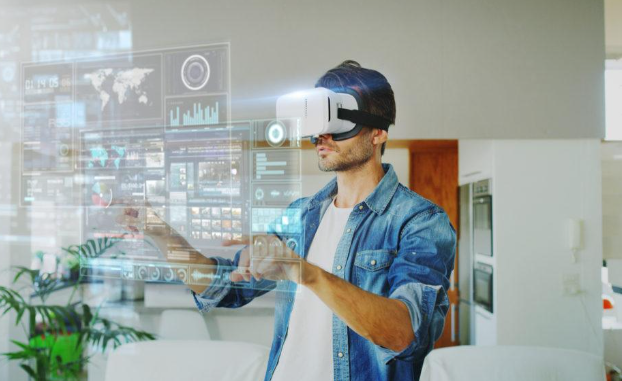
AR/VR Development Course in Visakhapatnam | Numerous courses are available for augmented reality (AR) and virtual reality (VR) development, ranging from beginner-friendly online programs to university specializations and professional bootcamps. The best option depends on your experience level and career goals. Most courses use either the Unity or Unreal Engine, the two dominant game engines for creating AR/VR experiences.
AR/VR Development Course in Visakhapatnam | Of course. Here is a comprehensive and structured outline for an AR/VR Development Course, designed to take a student from fundamental concepts to building and publishing their own immersive experiences.
Course Title: AR/VR Development: Building Immersive Experiences for the Metaverse
Target Audience: AR/VR Development Course in Visakhapatnam | Aspiring XR developers, game developers looking to expand their skills, mobile app developers, web developers, and 3D artists interested in real-time interaction.
Prerequisites:
- Essential: AR/VR Development Course in Visakhapatnam | Basic programming knowledge (variables, loops, functions, OOP) in any language. C# is highly preferred for Unity.
- Helpful: Experience with a game engine (Unity or Unreal) is a significant advantage.
- Beneficial: Basic understanding of 3D mathematics (vectors, coordinates, transformations) and 3D modeling concepts.
Course Goal: AR/VR Development Course in Visakhapatnam | To equip students with the end-to-end skills to design, develop, optimize, and deploy interactive Augmented Reality (AR) and Virtual Reality (VR) applications for major platfor
Detailed Course Modules
Module 1: Foundations of X
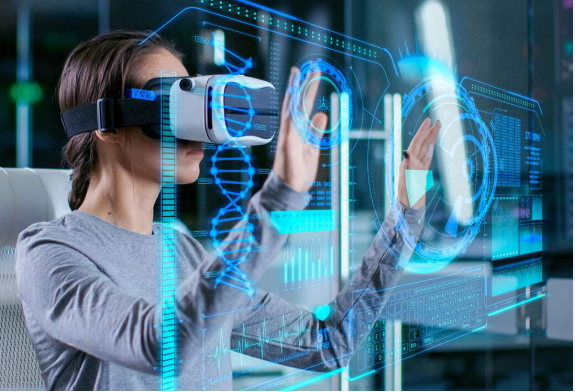
- 1.1 The XR Spectrum: AR/VR Development Course in Visakhapatnam | Defining the realities: AR (Augmented Reality), VR (Virtual Reality), MR (Mixed Reality). Understanding the differences, use cases, and hardware.
- 1.2 The Hardware Landscape:
- VR: Standalone (Meta Quest, Pico), PCVR (Valve Index, HTC Vive), PSVR.
- AR: Mobile AR (smartphones), Dedicated (Microsoft HoloLens, Magic Leap, Apple Vision Pro).
- 1.3 Human Factors & UX for XR: AR/VR Development Course in Visakhapatnam | Designing for comfort (mitigating motion sickness), intuitive interaction, and user safety. The principles of spatial design.
- 1.4 Choosing Your Platform & Engine: Overview of the two primary development engines: Unity (C#, broader AR support) and Unreal Engine (C++, high-fidelity graphics). This course will primarily focus on Unity due to its market share in XR.
Module 2: Core Development Environment Setup
- 2.1 Unity Fundamentals Crash Course: AR/VR Development Course in Visakhapatnam | Interface overview, GameObjects, Components, Transforms, Prefabs, and the Scene hierarchy.
- 2.2 Introduction to C# for Unity: Scripting structure,
MonoBehaviourlifecycle (Start(),Update()), accessing components, and basic input. - 2.3 Essential 3D Math for XR: AR/VR Development Course in Visakhapatnam | Vectors (position, direction), Quaternions (rotation), Matrices (transformations), and World vs. Local space.
- 2.4 Configuring Your Project for XR: Installing the necessary SDKs and packages (XR Interaction Toolkit, OpenXR, platform-specific SDKs like Oculus Integration).
Module 3: Virtual Reality (VR) Development
- 3.1 Setting Up a VR Project: Configuring Unity for a target headset (e.g., Meta Quest). Understanding the XR Rig and camera setup.
- 3.2 VR Input & Interaction:
- Hand Presence: Tracking controllers and simulating hands.
- The XR Interaction Toolkit: Using Interactables (grabbable objects) and Interactors (hands/controllers) to create core interactions like Grab, Throw, Use, and Push.
- 3.3 Locomotion Techniques: Implementing teleportation, smooth locomotion (joystick movement), and arm-swimming. Critical considerations for comfort.
- 3.4 UI in VR: Designing diegetic (in-world), spatial, and overlay UIs that are legible and interactable in 3D space.
- 3.5 VR Project Lab: AR/VR Development Course in Visakhapatnam | Building a simple interactive VR scene, like a “physics playground.”
Module 4: Augmented Reality (AR) Development

- 4.1 AR Foundation: Unity’s multi-platform framework for building AR apps. AR/VR Development Course in Visakhapatnam | Core concepts: World Tracking, Plane Detection (horizontal/vertical), Point Clouds.
- 4.2 Mobile AR (Android/iOS):
- Setup: Configuring Unity for ARCore (Android) and ARKit (iOS).
- Interaction: AR/VR Development Course in Visakhapatnam | Placing virtual objects on detected planes, manipulating them with touch gestures (rotate, scale, move).
- Environmental Understanding: Light estimation and occlusion.
- 4.3 Advanced AR Features:
- Image & Object Tracking: Triggering AR experiences from a specific image or 3D object.
- Face Tracking: Creating AR filters and masks.
- Cloud Anchors: Persisting AR experiences across multiple devices for shared multi-user AR.
- 4.4 AR Project Lab: Building a mobile AR app that places furniture in a room or an interactive business card.
Module 5: 3D Assets for XR
- 5.1 The Asset Pipeline: Importing 3D models, textures, and animations into Unity. Supported formats (FBX, OBJ, glTF).
- 5.2 Optimization for Real-Time Performance: The critical importance of polygon count, draw calls, texture atlasing, and Level of Detail (LOD). Targeting high frame rates (90fps for VR).
- 5.3 Materials and Shaders: Creating performant and visually appealing materials. Introduction to URP (Universal Render Pipeline) for XR.
- 5.4 Animation: Importing skeletal animations and using the Animator Controller to bring characters and objects to life.
Module 6: Advanced Interaction & Mechanics
- 6.1 Physics Interaction: Using Unity’s physics engine for realistic object behavior. Creating puzzles and mechanical interactions.
- 6.2 User Interface (UI) & Menus: Building complex spatial menus and HUDs using the Canvas and world-space rendering.
- 6.3 Audio Spatialization: Using 3D spatial sound to enhance immersion and provide user feedback.
- 6.4 Multi-user XR (Networking): Introduction to Photon Fusion or Netcode for GameObjects to create shared social experiences in VR/AR.
Module 7: Performance, Testing, and Debugging
- 7.1 Profiling and Optimization: AR/VR Development Course in Visakhapatnam | Using the Unity Profiler to identify CPU, GPU, and memory bottlenecks. Strategies for optimization.
- 7.2 Testing on Target Devices: The build and deploy cycle. Using Android Logcat and developer dashboards.
- 7.3 Debugging in XR: Visualizing raycasts, interaction points, and using on-screen logs in the headset.
Module 8: Project Planning & Publishing
- 8.1 The XR Design Process: Ideation, storyboarding, and prototyping for XR.
- 8.2 Building for Distribution:
- VR: Building and submitting to the Meta App Lab / official Store, SteamVR.
- AR: Building APKs for Android (.apk) and bundles for iOS (.ipa) and submitting to app stores.
- 8.3 Business & Ethics: Exploring commercial applications, privacy concerns (especially in AR), and the future of the metaverse.
Module 9: Capstone Project
- AR/VR Development Course in Visakhapatnam | Students conceive, design, and develop a complete, polished XR experience from the ground up.
- Requirements:
- Choose a primary focus: a VR game/experience or a functional AR application.
- Implement complex, custom interactions.
- Incorporate optimized 3D assets, UI, and spatial audio.
- Must be built, deployed, and tested on a target device (Quest, iPhone, Android).
- The final deliverable is a presentation video, the source code, and the built application.
Recommended Tools & Technologies
- Game Engine: Unity (LTS Version) + Visual Studio / Rider
- Key SDKs/Packages: XR Interaction Toolkit, AR Foundation, ARCore/ARKit XR Plug-in, Oculus Integration (if targeting Quest)
- Programming Language: C#
- 3D Modeling (Introductory): Blender (free) or Maya / 3ds Max
- Version Control: Git with Git LFS (for large files)
- Target Hardware: Essential. Meta Quest 2/3/Pro (for VR) and a modern iOS/Android smartphone (for AR).
Learning Outcomes
Upon completion, students will be able to:
- AR/VR Development Course in Visakhapatnam | Differentiate between AR, VR, and MR and identify appropriate use cases for each.
- Set up and configure a Unity project for both VR and AR development.
- Implement core VR interactions (grab, throw, teleport) and AR features (plane detection, image tracking) using industry-standard tools.
- Design and develop comfortable and intuitive user experiences for immersive environments.
- Import, optimize, and integrate 3D assets for real-time performance.
- Profile, debug, and optimize an XR application to meet critical performance benchmarks.
- Build and deploy a complete application to a major platform (Meta Quest Store, Apple App Store, or Google Play Store).
- Plan and execute a full XR project from concept to publication.
This curriculum is intensely practical. AR/VR Development Course in Visakhapatnam | The path to XR mastery is through hands-on building, testing on real hardware, and iterative design. The capstone project is crucial for synthesizing all the individual skills into a single portfolio-ready piece.